
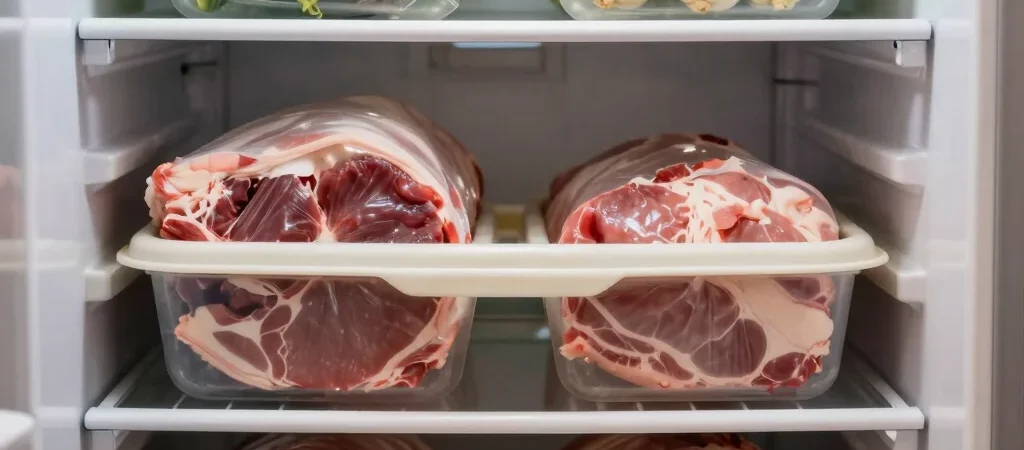
The trip home is part of food handling, not a pause in it. Meat should stay cold, its package should not leak onto other groceries, and raw juices should never share a surface with ready-to-eat food. A simple routine is more dependable than trying to fix a careless step later.
Keep the cold chain simple
Put meat in the refrigerator promptly, ideally in a sealed container or on a plate on the lowest shelf so drips cannot reach other foods. Keep the refrigerator at 40°F (4°C) or below, and use a refrigerator thermometer if you are unsure of its temperature. If you will not use the meat soon, freeze it while it is still in good condition and label the package with the date.
Separate raw from ready to eat
Use a clean board and knife for raw meat, then wash them with hot, soapy water before using them for vegetables, bread, or cooked food. Wash your hands after handling raw meat, and do not rinse it in the sink; splashes can spread raw juices around the work area. Keep cooked food on a clean plate rather than returning it to a plate that held raw meat.
Thaw with a plan
The refrigerator is a dependable place to thaw frozen meat because it keeps the food cold as it softens. If you use another safe thawing method, cook the meat promptly and follow current food-safety guidance for that method. When storage time or handling is uncertain, do not rely on smell or appearance alone to establish that food is safe.