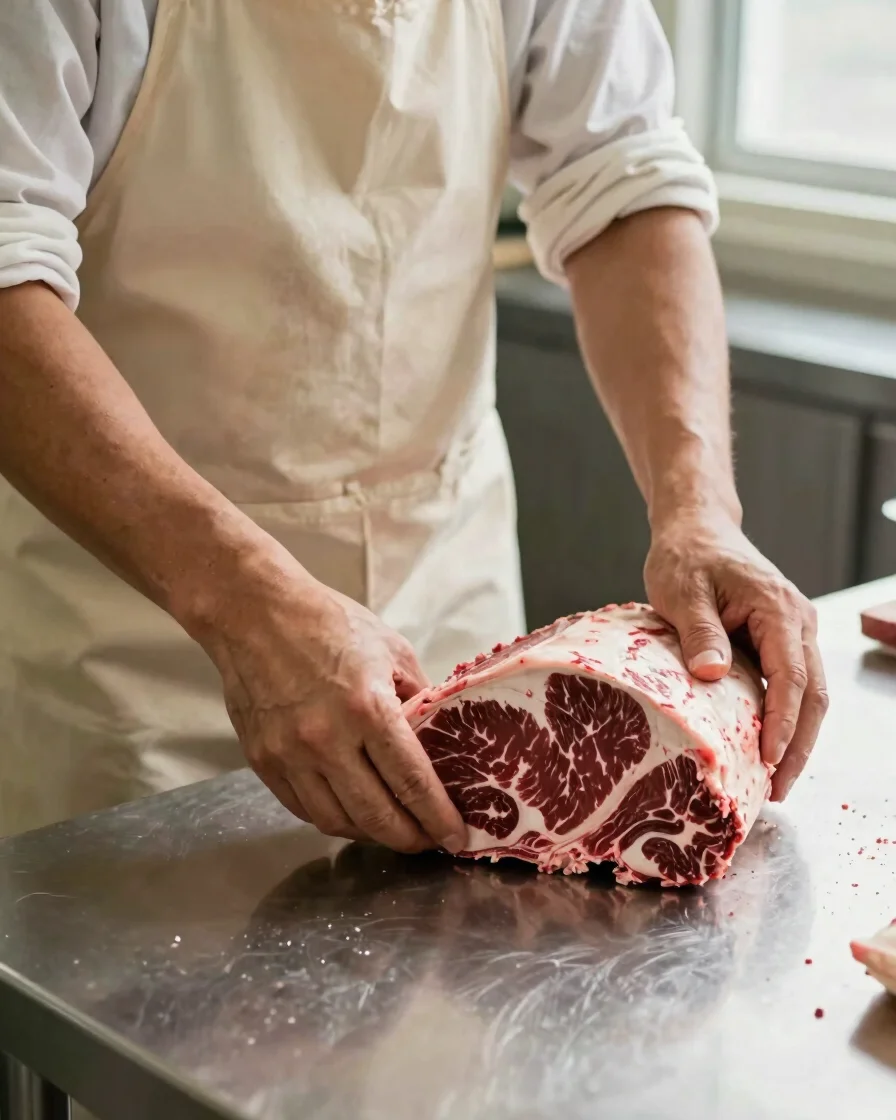
Découpe et morceaux
Reading the carcass: anatomy, grading, and the cuts they yield
Each muscle group carries its own structure, collagen, and grain, so each cut asks for a different cooking method. This guide walks through the main primal and secondary cuts and how to read them at the counter.
Cut catalog
Primal and secondary cuts, and where they belong
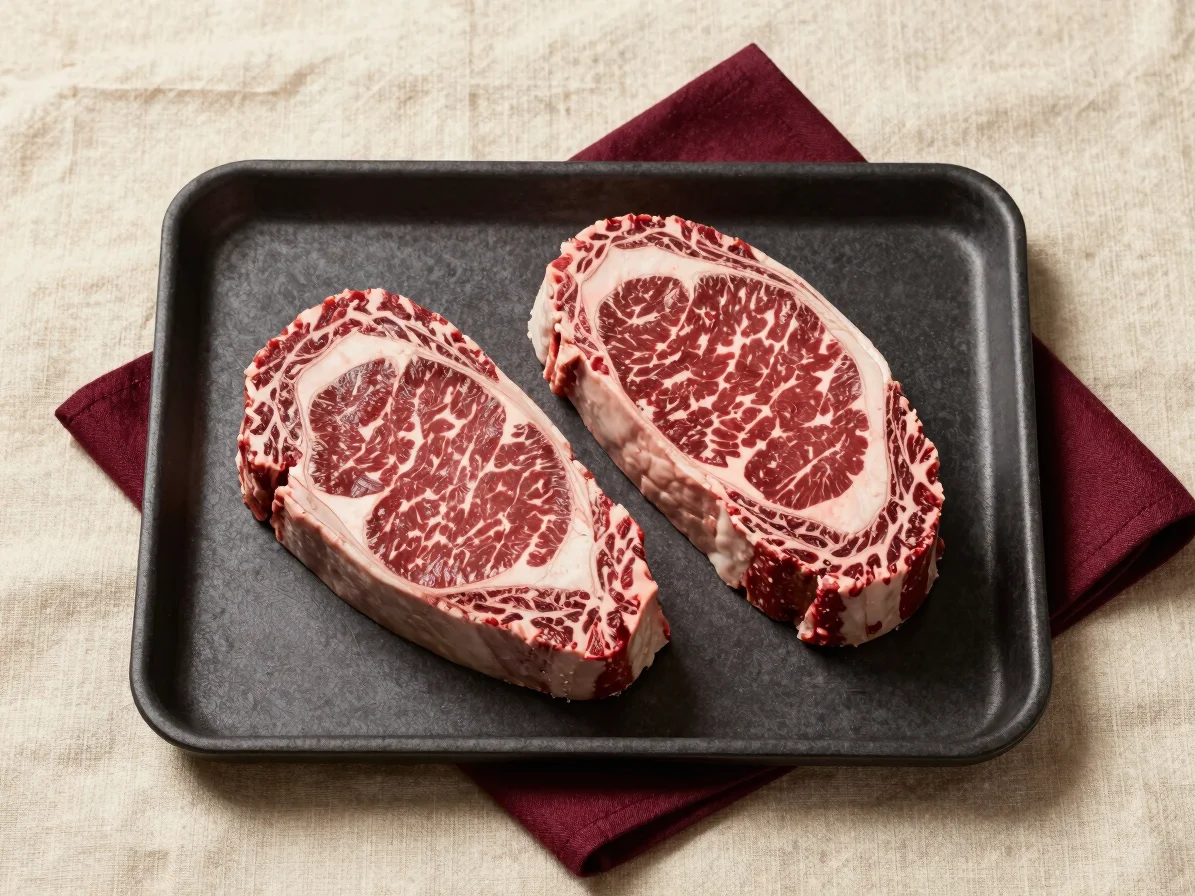
Tender muscle
Steaks from the loin and rib
Low-collagen muscles with fine grain and visible marbling. Their tenderness suits dry, direct heat: a hot pan or grill brought to a firm sear, then rested briefly before slicing across the grain.
Working muscle
Shoulder and shank for long braising
Rich in connective tissue that softens into gelatin over several hours of gentle, moist heat. Their flavor deepens with time, which makes them the natural choice for stews, daubes, and slow-cooked dishes.
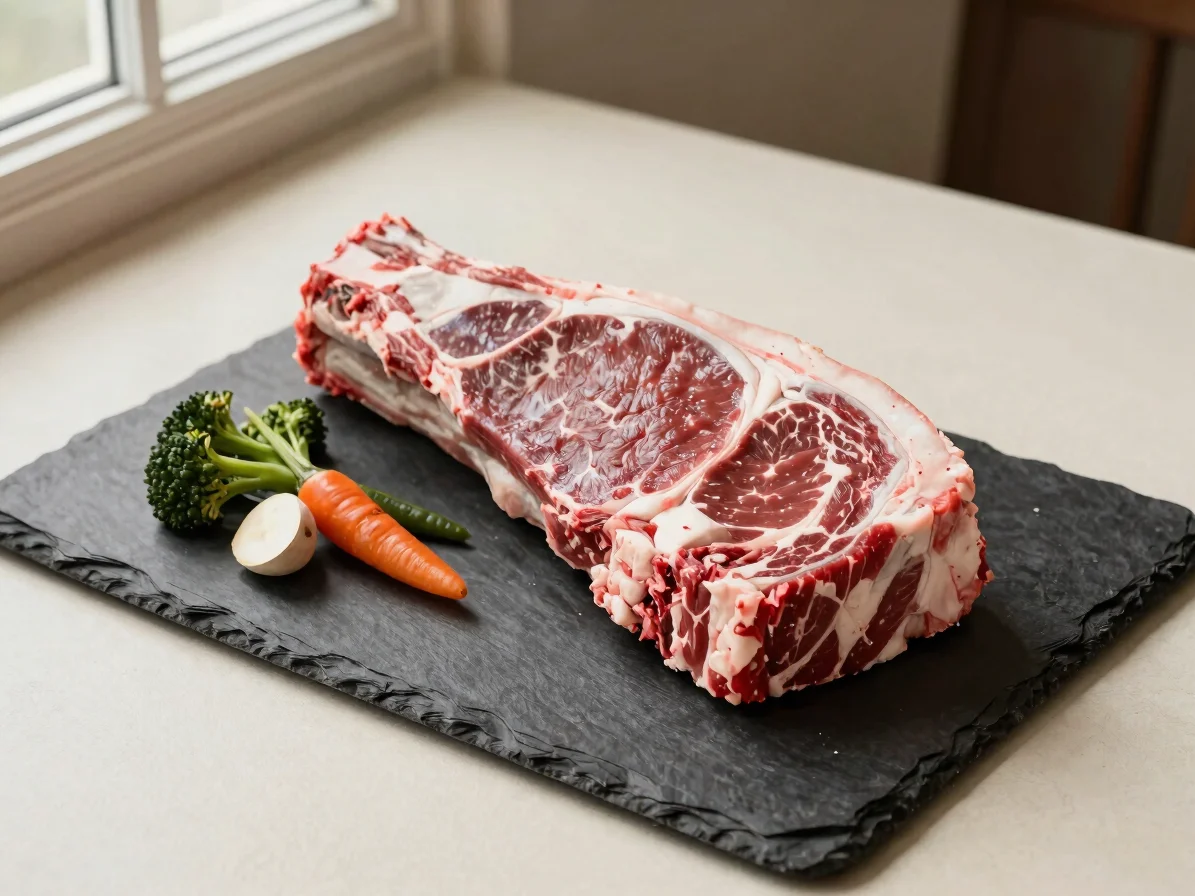
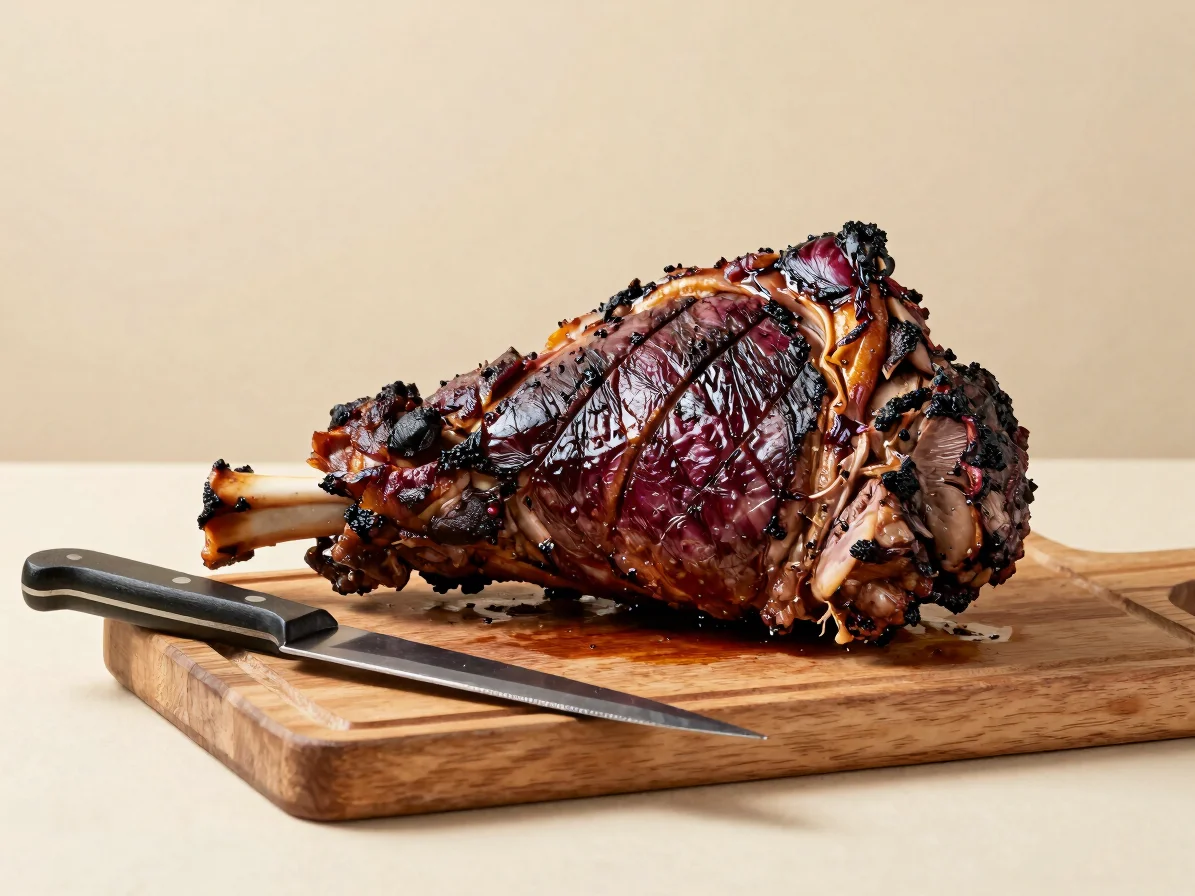
Versatile middle
Rump and topside for roasting and slicing
Medium connective tissue and a firm texture that holds its shape. Roasted whole at moderate temperature and rested, then sliced thinly, these cuts reward careful heat control and clean, even slices.
Selection rules
How to read a cut before you buy it
Look at the color first: fresh red meat should show a clear, even hue rather than a dull or greyish surface. Press the fat gently; it should feel firm and not soft or sticky. Check the surface for moisture, which should be light and not pooled or slick. Finally, observe the grain direction, because cutting across it shortens the fibers and makes the meat more tender on the plate.
Ask your butcher to show you the cut and explain where it comes from. Knowing the muscle group lets you match the cut to a cooking method with confidence, whether that means quick searing or long, patient braising.