
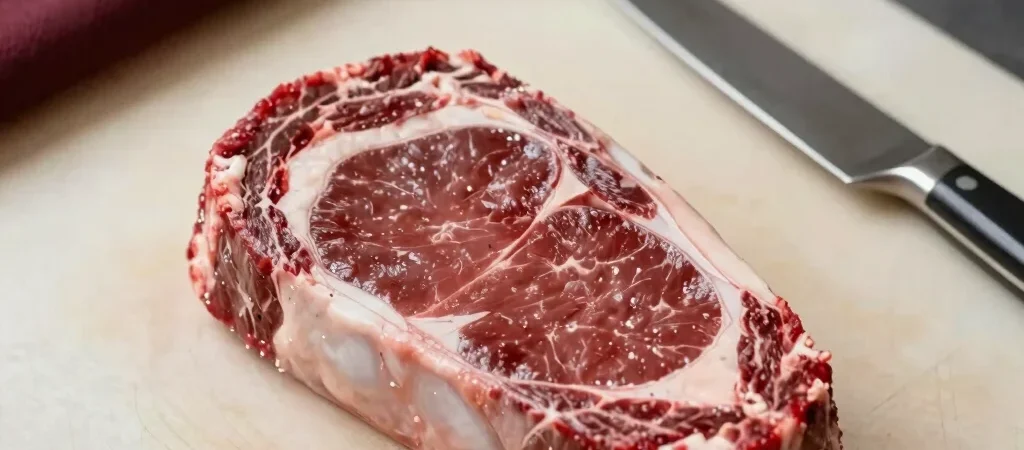
You can have two beef cuts of similar size and still need entirely different plans for dinner. A bavette is usually suited to brief, intense heat, while chuck benefits from time and moisture. The useful clue is not just the cut’s name, but how the muscle is built.
Read the muscle, not just the label
Bavette is a French name used for more than one cut, and the exact meaning can vary by butcher and region. These cuts tend to have visible, elongated fibers, so they are commonly cooked quickly and sliced across the grain. Ask which bavette you are buying and look for the direction of the fibers before cooking.
Match heat to structure
Chuck comes from the shoulder, a working area with connective tissue that can feel firm when cooked quickly. A covered braise at a gentle simmer gives that tissue time to soften and seasons the cooking liquid along the way. By contrast, a well-marbled ribeye is often cooked with direct heat, where its fat and relatively tender texture suit a shorter method.
Make the final cut count
For a steak with long fibers, slice thinly across the grain after cooking; this shortens the fibers on the plate and makes each bite easier to chew. For braised chuck, the meat may pull apart once tender, so the goal is a fork-tender texture rather than a particular steak-like slice. If the name on the label is unfamiliar, ask your butcher where the cut comes from and how they would prepare it.