Cuisine et recettes
Heat, cut, and timing
Meat preparation rests on three things: controlling heat, choosing the right cut, and timing each step. This guide walks through searing, roasting, and braising, then explains why resting and careful carving matter.
Three core methods
Searing, roasting, and braising
High heat
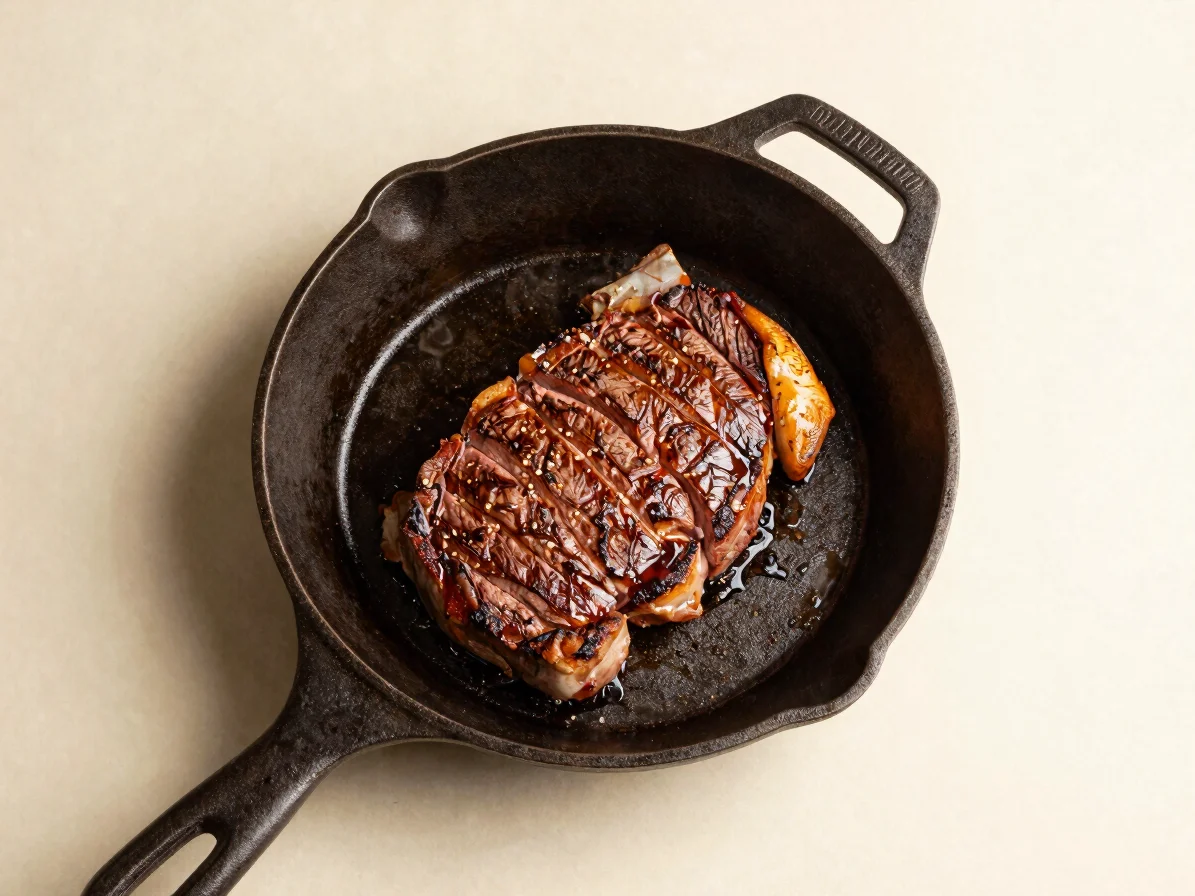
Skillet searing
A hot pan develops a deep brown crust through the Maillard reaction, while the interior stays tender. Pat the meat dry, season it, and sear until a crust forms before lowering the heat to finish.
Dry oven heat
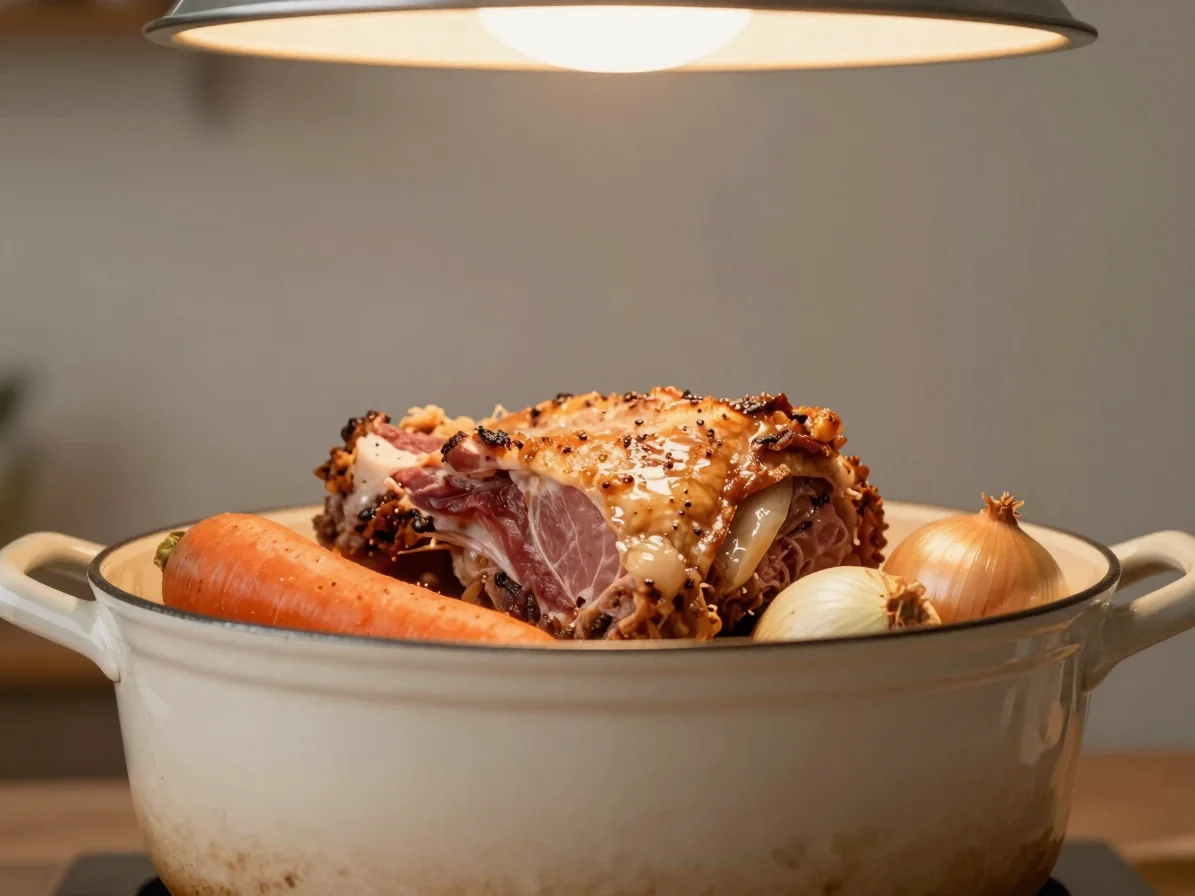
Slow-pot roasting
Roasting in a covered pot with a little fat and aromatics keeps larger cuts juicy. Lower the oven temperature and cook until the centre reaches the target doneness for that cut.
Moist heat
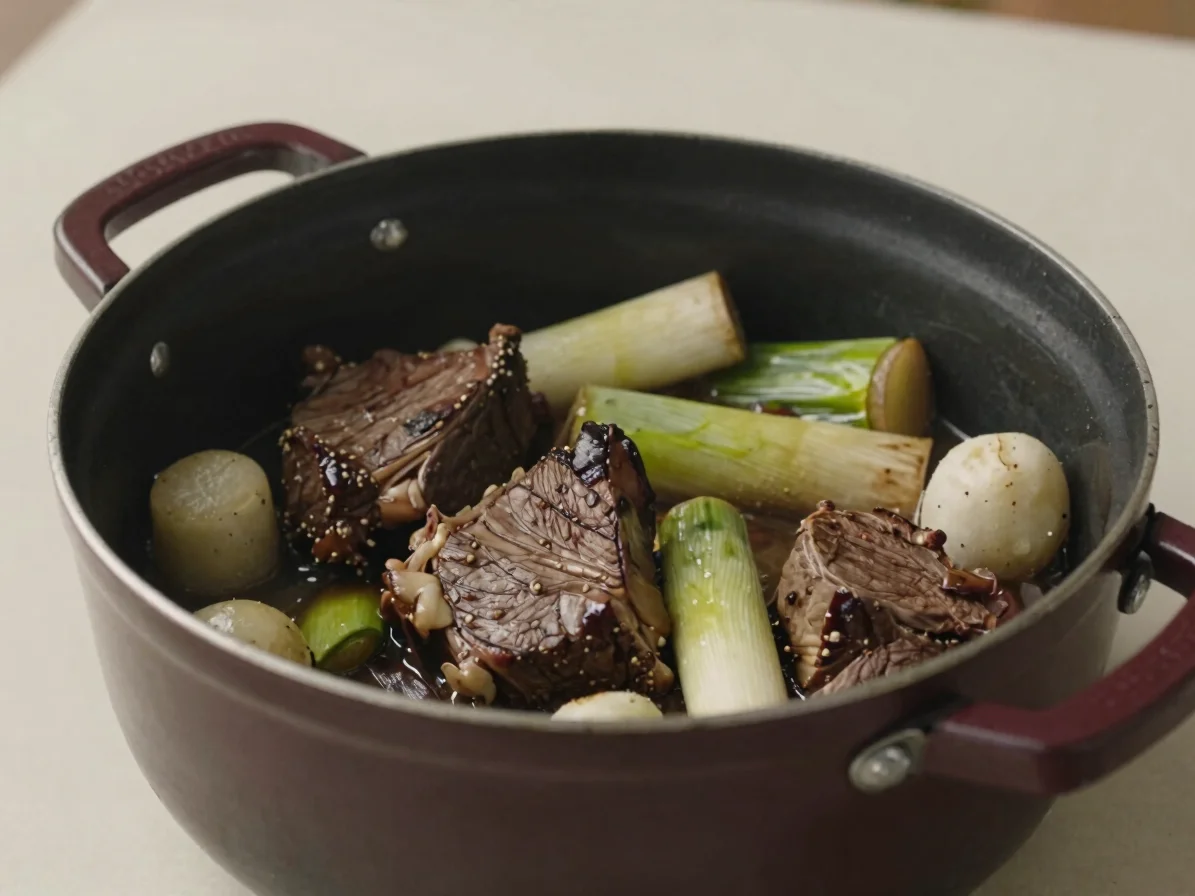
Aromatic braising
Braising with wine or stock and seasonal vegetables converts connective tissue into gelatin over a long, gentle simmer. Keep the liquid at a bare simmer and check tenderness rather than the clock.
After the heat
Rest, deglaze, and carve
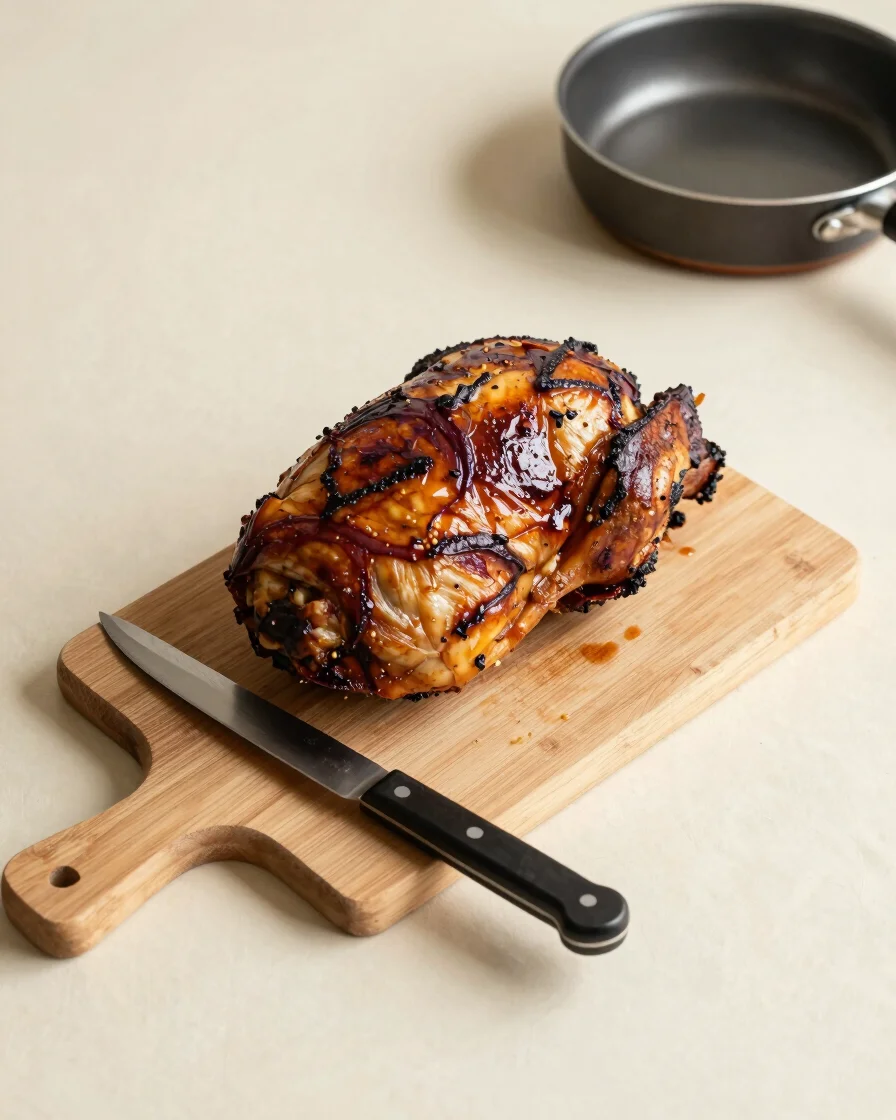
Resting cooked meat for several minutes lets juices redistribute through the muscle fibres, so they stay in the meat rather than spilling onto the board. While it rests, deglaze the pan with a splash of stock or wine, scraping up the browned residue to build a simple sauce.
When carving, cut across the muscle grain. Short fibres make each slice more tender to eat.