
Techniques and traditions
Butchery and Charcuterie
Charcuterie rests on three controls: salt concentration, temperature, and humidity. This page traces the history of the craft and the technical principles behind curing, mincing, casing, and cellar aging.
Sequential techniques
Four core methods of charcuterie
01
Salting and brine curing
Salt draws out moisture and concentrates flavour. Brine curing distributes salt evenly through the muscle, a method used for hams and bacon where a steady salt level must reach the centre.
02
Mincing and emulsifying
Cold meat and fat are ground and worked together to form a stable mixture. Keeping the mass cold throughout prevents the fat from smearing and gives terrines and sausages a clean bite.
03
Casing
Natural casings allow sausages to dry and mature while holding their shape. The diameter and filling density determine how evenly the product will cure from the outside inward.
04
Cellar aging
Maturation takes place in a cool, humid cellar where temperature and airflow are watched closely. Patient drying over weeks or months develops deep flavour and a firm texture.
Heritage preparations
Dry-cured hams, rillettes, and regional terrines
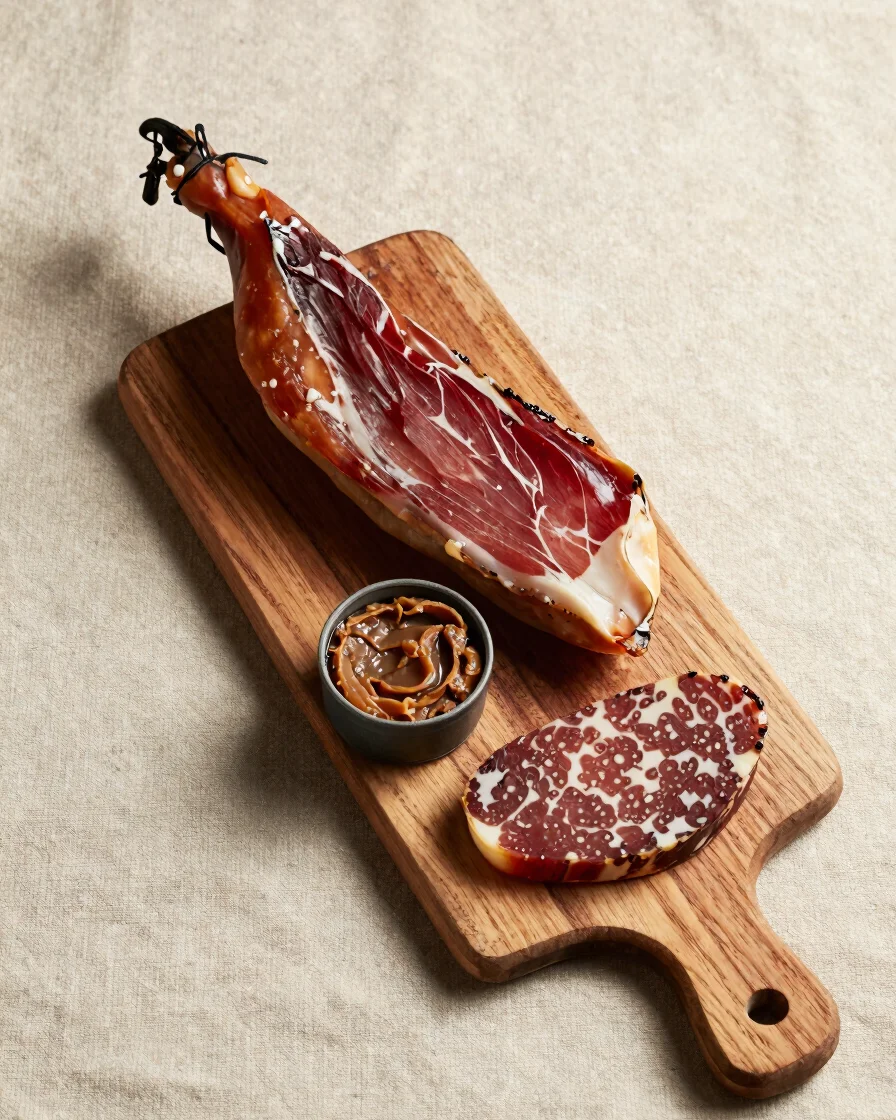
Many French specialties were developed to make the most of a whole animal and to keep it through the year. Dry-cured hams are salted and hung slowly, while rillettes are cooked gently in fat and sealed for storage.
Regional terrines follow exact fat-to-lean ratios and traditional seasonings passed between generations. Each recipe reflects local ingredients, climate, and the habits of the households that made it.